
How to efficiently machine shaped parts on CNC mill-turn machines?
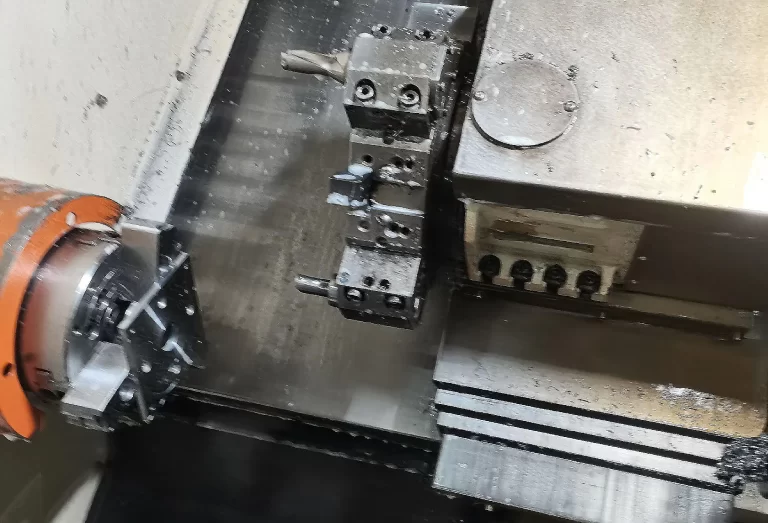

With the explosive growth of the global new energy vehicle market, the electric motor plays a critical role.
It serves as the power source for new energy vehicles, including pure electric, hybrid, and fuel cell vehicles.
The electric motor directly converts electrical energy into mechanical energy to drive the wheels.
It stands as one of the three core components (alongside batteries and electronic control systems) that distinguish new energy vehicles from traditional fuel-powered vehicles.
Simultaneously, as the “heart” of new energy vehicles, improvements in motor performance are crucial to the overall vehicle’s power delivery and fuel efficiency.
Let’s talk about the challenges they faced and how to solve them.
The motor housing and motor shaft, as core structural components, respectively fulfill the critical functions of providing structural support and transmitting power.
The machining quality of these two elements directly impacts the motor’s operational precision, vibration/noise levels, and service life.
Statistical data indicate that the manufacturing costs of the motor housing and shaft account for over 60% of the total motor system cost.
Their machining precision is a key factor that limits the motor’s high-speed capability.
This includes factors such as the coaxiality of the motor housing bearing bore and the dynamic balance accuracy of the motor shaft.
These factors are especially critical when rotational speeds exceed 15,000 rpm.
Currently, aluminum alloy motor housings dominate the industry due to their lightweight advantage (40% lighter than cast iron housings).
However, their thin-walled structure (3–5 mm) is prone to 0.04–0.08 mm deformation during CNC machining, leading to bearing bore precision deviations.
Meanwhile, motor shafts made from high-strength alloy steels like 40Cr often have aspect ratios exceeding 10.
This makes them prone to vibration during turning and grinding operations.
They also require dynamic balancing precision to meet G2.5 grade standards, where residual unbalance must be ≤ 2.5 g·mm/kg.
These requirements pose significant machining challenges.
Statistical data indicates that traditional machining processes cause a combined scrap rate for motor housings and shafts of up to 12%.
This high scrap rate severely limits the expansion of production capacity and effective cost control.
Therefore, researching the key challenges and solutions for CNC machining of motor housings and shafts holds significant importance.
It plays a crucial role in advancing the localization and high-end development of core components for new energy vehicles.
The motor housing serves as a core component of the powertrain in new energy vehicles.
Its top (open side) connects to the inverter, while the bottom interfaces with the gearbox.
It also connects to the main shaft bearings via embedded bearing bushings, with the side walls typically suspended from the subframe.
The housing is primarily made of 6061-T6 aluminum alloy, which features a tensile strength of 310 MPa.
It exhibits moderate cutting forces and tool wear rates. With an elastic modulus of 69 GPa—only one-third that of steel—its thin-walled structure is prone to cutting springback.
Its thermal conductivity of 180 W/(m·K) facilitates rapid heat transfer during machining, resulting in a significant rise in workpiece temperature.
Its thermal expansion coefficient reaches 23.6 × 10⁻⁶/℃, resulting in poor dimensional stability at elevated temperatures.
When cutting temperatures exceed 100℃, the radial expansion of a 60mm bearing bore can reach 0.027mm, severely compromising machining accuracy.
Its typical structure and corresponding machining process characteristics are as follows.
These structures have wall thicknesses of 3–5 mm and a length-to-diameter ratio of 1.
They exhibit insufficient overall rigidity, which makes them prone to vibration and deformation during machining.
In machining processes, engineers employ axial positioning fixtures (such as elastic collar chucks) to reduce radial clamping forces and prevent deformation of the thin walls under pressure.
Engineers divide cutting operations into rough milling and finish milling.
Rough machining leaves a 0.5–1 mm allowance, while finish machining employs a back cutting depth of ap ≤ 0.3 mm and a feed rate of f = 0.15–0.2 mm/r to reduce cutting forces.
Real-time monitoring of workpiece temperature during processing is essential.
Infrared temperature measurement controls the temperature rise to ≤ 50°C, minimizing thermal deformation effects.
As the core assembly reference, the coaxiality of the bearing bores directly impacts bearing life.
Surface roughness must meet interference fit requirements (coaxiality ≤ 0.02 mm, surface roughness Ra ≤ 1.6 μm).
Processing techniques:
Rough machining employs CNC boring at speeds of n = 800–1000 rpm and feed rates of vf = 50–80 mm/min; semi-finishing leaves a grinding allowance of 0.2–0.3 mm.
Finishing employs precision honing using diamond honing strips.
Floating fixtures compensate for minor deviations between the machine tool spindle and workpiece axis to ensure coaxiality compliance.
Hole axis deviation is inspected before and after machining using a coordinate measuring machine.
Depth: 15mm, aspect ratio 3:1, surface roughness Ra ≤ 3.2μm.
The high aspect ratio weakens sidewall rigidity, making the part prone to chatter during milling and compromising surface quality.
For machining, select a carbide end mill (helix angle 35°, length-to-diameter ratio ≤5) and employ a cycloidal milling path to reduce radial cutting forces;
Multi-layer cutting (3–5 mm depth per layer) with single-pass width ≤ 1/3 tool diameter (approx. 5 mm), combined with high-speed spindle operation (n = 1500–2000 rpm), enhances cutting stability;
Employ a high-pressure internal coolant (pressure: 3–5 MPa) to promptly remove chips and cool the tool, thereby preventing vibration caused by chip buildup.
Flatness ≤ 0.03 mm.
Flatness affects the assembly seal between the motor and base, while bolt hole position indirectly impacts overall installation accuracy.
For machining processes:
The boss surface is machined using precision milling followed by grinding.
Milling uses the bearing bore axis as the reference for positioning.
Grinding utilizes an electromagnetic chuck (flatness error ≤ 0.01mm) with a grinding wheel linear speed of≥ 30 m/s to ensure surface flatness.
Bolt hole machining employs a “drill-ream-tap” process using a CNC drilling and tapping center (positioning accuracy ±0.02mm).
The workpiece coordinate system is established with the bearing bore as the reference.
Rigid tapping ensures thread hole perpendicularity ≤0.05mm/100mm.
The motor shaft serves as the core rotating component in the electric drive system of new energy vehicles.
It connects the motor rotor to the transmission system, such as the reduction gearbox and wheel half-shafts.
Its function is to efficiently transmit the torque generated by the motor to the drive wheels.
At the same time, it must withstand alternating loads, torsional stresses, and vibration impacts during rotation.
Compared to motor shafts in traditional fuel-powered vehicles, those in new energy vehicles face stricter requirements.
These requirements involve material selection, structural design, and machining precision.
They stem from the high-speed, high-power-density, and lightweight characteristics of electric drive systems.
Common materials for new energy vehicle motor shafts include 40Cr or 20CrMnTi alloy steel.
Taking 40Cr as an example, its tensile strength is ≥ 785 MPa, resulting in high cutting forces and rapid tool wear.
After quenching and tempering, its hardness reaches 220–250 HBW, making it suitable for withstanding alternating loads.
However, this high hardness increases machining difficulty. Its elastic modulus of 206 GPa provides good rigidity, though vibration may occur with high aspect ratios.
With a thermal conductivity of 36 W/(m·K), heat transfer during cutting is slow, which can potentially cause tool overheating.
Its thermal expansion coefficient of 11.5 × 10^6/℃ results in relatively lower thermal deformation compared to aluminum alloys.
Typical structural configurations and corresponding machining characteristics are outlined below.
Total length: 500–800 mm; minimum diameter: 30 mm; maximum diameter: 80 mm; length-to-diameter ratio >10; overall rigidity is relatively low.
During machining, a center support or tailstock must be used to provide auxiliary support and control vibration during turning and grinding processes.
The turning operation should be divided into rough turning and finish turning to progressively correct geometric accuracy.
When grinding, grinding wheel parameters must be optimized to prevent surface damage.
Precision requirement: IT5 grade, roundness ≤0.01mm, surface roughness Ra ≤0.8μm, classified as a high-precision mating surface.
Final machining must be achieved through precision grinding (e.g., on a cylindrical grinding machine).
Before grinding, ensure the coaxiality of the workpiece reference. Maintain a constant-temperature environment to control thermal deformation.
Perform superfinishing when necessary to meet surface precision requirements.
With an aspect ratio of up to 20, used for balancing weights or lubrication passages.
Deep hole machining poses significant challenges in chip removal and cooling.
Typically processed using gun drilling or BTA deep hole drilling techniques, the operation requires high-pressure coolant delivery to ensure hole straightness and surface finish.
Post-machining operations include deburring and precision inspection of hole diameter.
Positioning accuracy requirement ≤0.03mm to ensure assembly precision of transmission components.
Keyways are machined via CNC milling or broaching, with workpiece axis as the reference for positioning.
Threaded holes are completed using a CNC drilling and tapping center.
During machining, the machine coordinate system must be calibrated to prevent cumulative errors.
Requires achieving G2.5 grade, with residual unbalance ≤2.5 g·mm/kg.
Dynamic balancing testing must be performed after shaft precision machining.
Adjustments are made by removing mass (through milling or drilling) or adding counterweights (via welding balancing weights) at designated locations (e.g., flange ends or shaft shoulders) until the balancing accuracy requirement is met, thereby ensuring stability during high-speed operation.
As the core component that supports and protects the motor, the machining precision of the motor housing is primarily controlled by geometric tolerances.
This directly impacts bearing assembly accuracy and the overall sealing integrity of the motor.
Bearing bore coaxiality must be ≤0.02mm to ensure alignment of the φ60H7 bearing bores at both ends, preventing abnormal wear caused by bearing misalignment.
Flatness must be ≤0.03mm/100mm for mounting bosses and flange surfaces, ensuring uniform force distribution during bolted connections and preventing assembly deformation.
The surface roughness value Ra of the bearing bore is ≤1.6μm, achieved through precision boring or honing processes to reduce contact stress between the bearing and bore wall.
The surface roughness value Ra of the heat dissipation grooves is ≤3.2μm.
The heat dissipation grooves have an axial distribution with a height-to-width ratio of 3:1.
Due to this design, chatter must be controlled during side wall machining.
This control ensures heat dissipation efficiency while avoiding stress concentration.
The bearing bore dimension tolerance is specified as H7 to meet the interference fit requirements for the bearing.
For thin-walled structures, wall thickness tolerance is controlled within ±0.1mm.
This requires balancing rigidity with lightweight design to prevent dimensional deviations caused by elastic deformation during machining.
Air tightness requirement ≤5×10⁹ Pa·m³s.
For enclosed motor housings, manufacturers must employ helium mass spectrometry leak detection.
This ensures internal cavity sealing.
Proper sealing prevents dust and moisture ingress, which could otherwise compromise motor lifespan.
Particularly under high-speed or harsh operating conditions, air tightness directly impacts the motor’s protection rating (IP rating).
The motor housing is a critical component in the powertrain system of new energy vehicles, with its manufacturing process directly impacting both vehicle performance and cost.
The aforementioned precision requirements are closely tied to the housing’s thin-walled cylindrical structure (wall thickness 3–5 mm, aspect ratio 1:1).
During machining, manufacturers must control thermal deformation and elastic springback.
They can achieve this through methods such as constant-temperature cutting and tooling rigidity optimization.
These measures ensure coordinated alignment of coaxiality and flatness across multiple hole systems.
As the core rotating component responsible for torque transmission, the motor shaft’s precision system centers on rotational accuracy and dynamic balance.
These factors directly determine the motor’s operational stability and service life.
Machining precision primarily involves controlling the basic dimensional tolerances and geometric tolerances at different locations along the shaft’s diameter and length.
Bearing seat roundness ≤0.01mm, dimensional tolerance grade k5.
Precision grinding must achieve a mirror-like surface finish (surface roughness Ra ≤0.8μm) to ensure precise fit with the bearing inner ring and minimize radial runout during high-speed rotation.
Dimension tolerance for each step of the stepped shaft is ±0.02mm.
For slender shaft structures with a length-to-diameter ratio >10, vibration deformation during turning and grinding processes must be controlled to prevent shaft axis deviation caused by insufficient rigidity.
Dynamic balancing accuracy must meet G2.5 grade (residual unbalance ≤ 2.5 g·mm/kg).
After precision machining, dynamic balancing testing is required.
Manufacturers must perform weight removal or counterweight adjustment on flange ends or shaft shoulders.
This eliminates centrifugal force imbalance during high-speed operation.
Doing so prevents bearing overload and vibration noise in the entire machine.
The surface roughness value Ra of the journal is ≤1.6μm, meeting the mating requirements for sliding bearings or seals.
For special requirements, residual stress is ≤80MPa.
Through quenching and tempering followed by stress-relief annealing, processing stresses that could cause shaft bending or fatigue fracture are avoided.
Particularly under alternating load conditions, residual stress control is critical for enhancing the reliability of shaft components.
The straightness and diameter consistency of the central deep bore (with a length-to-diameter ratio of 20) indirectly affect the installation of balancing weights and the unobstructed flow of lubrication channels.
The positional accuracy of keyways and threaded holes must be ≤0.03 mm.
This ensures the circumferential positioning precision of transmission components, such as gears and couplings.
As a result, it prevents phase deviation during torque transmission.
To address the stepped shaft structure and slender characteristics of motor shafts, manufacturers must incorporate auxiliary support from center frames during machining.
They should also use constant-temperature grinding and perform residual stress detection.
These measures ensure simultaneous compliance with rotational precision and dynamic balance specifications, providing fundamental assurance for high-speed, high-precision motor operation.
The machining of aluminum alloy motor housings presents two major challenges: controlling deformation in thin-walled structures and ensuring precision in complex cavity machining.
Regarding deformation control in thin-walled structures, their inherent thin-walled characteristics exacerbate machining deformation issues, primarily manifested in the following aspects:
Aluminum alloys have a low elastic modulus.
When the radial cutting force Fy reaches 50N, the springback of a 3mm-thick side wall can exceed 0.04mm, surpassing bearing bore tolerance requirements.
In traditional three-axis machining, cumulative springback errors from multiple passes can reach 0.08mm.
Aluminum alloys exhibit high thermal expansion coefficients.
At cutting temperatures of 200°C, the radial expansion of a φ60mm bearing bore reaches 0.027mm.
In conventional machining, multiple setups with uneven cooling can result in cumulative thermal deformation of up to 0.04mm.
Conventional clamping plates apply concentrated single-point clamping force (approximately 500N), causing 0.04mm surface indentation within a 10mm range beneath the plate.
This results in springback error upon release.
Regarding precision control in complex cavity machining, the intricate cavity structure of motor housings poses significant challenges for CNC machining.
These challenges are manifested in the following aspects.
Changes in tool inclination alter cutting force distribution.
When β increases from 0° to 30°, the radial force Fy decreases by 25%, while the axial force Fz increases by 15%, potentially causing axial movement of the workpiece.
Furthermore, the cumulative effect of five-axis interpolation motion accuracy (≤0.01mm) during complex contour machining leads to deviations in the actual cutting path from the design values.
With a height-to-width ratio of 3:1, the cooling groove sidewalls exhibit insufficient rigidity, prone to chatter during milling.
This increases surface roughness Ra from 1.6 μm to 3.2 μm, accompanied by 0.05 mm undulating deformation.
The coaxiality requirement for both bearing bore ends is ≤0.02mm.
Traditional three-axis machining necessitates three separate setups, accumulating positioning errors up to 0.05mm—far exceeding the precision requirement.
Motor shaft machining faces two core challenges: technical bottlenecks in high-precision rotary surface machining and the coordinated control of dynamic balance accuracy.
Regarding high-precision rotary surface machining, the shaft’s high length-to-diameter ratio (>10) and stringent accuracy requirements lead to multiple technical difficulties.
1.Bending vibration frequently occurs during turning.
When the length-to-diameter ratio exceeds 10, vibration amplitude can reach 0.03mm, causing shaft neck roundness to exceed tolerances.
Uneven clamping force (a difference of 200N) in self-centering chucks exacerbates deformation, increasing the roundness error to 0.06mm.
2.Low thermal conductivity of the material adversely affects machining quality.
During grinding, the low thermal conductivity of 40Cr alloy steel concentrates cutting heat.
When the grinding wheel’s linear speed exceeds 150 m/s, surface temperatures can reach 800°C.
This leads to tempering softening, resulting in a 15% reduction in hardness.
It also increases the risk of grinding cracks and deteriorates surface quality, resulting in a surface roughness value Ra greater than 1.6 μm.
3. Significant machining errors with standard twist drills.
When machining deep center holes (length-to-diameter ratio of 20) using standard twist drills, straightness errors reach 0.1mm/100mm, with hole diameter tolerances of ±0.05mm.
This fails to meet dynamic balancing weighting requirements.
Regarding dynamic balancing precision control, its accuracy is significantly influenced by multiple coupled factors, primarily manifested as follows:
1. Cumulative machining errors are pronounced.
The combined effects of bearing seat roundness error (0.01 mm), deep hole eccentricity (0.03 mm), and keyway positional error (0.02 mm) can generate residual unbalance as high as 12 g·mm/kg, exceeding the G2.5 grade requirement (≤2.5 g·mm/kg).
2. Straightness deformation in 20CrMnTi carburized and quenched shaft components can reach 0.1 mm/100 mm.
Although straightening processes can correct this, residual straightening stresses (≥80 MPa) compromise dynamic balance stability.
3. When the surface roughness Ra of bearing seats exceeds 1.6μm, aerodynamic imbalance increases by 30% during high-speed rotation, leading to reduced dynamic balancing accuracy.
The machining of motor housings and motor shafts presents three major common challenges and difficulties, as detailed below.
Aluminum alloy machining requires sharp tools with efficient chip evacuation (e.g., AlCrN-coated tools), while alloy steel machining demands high-hardness, wear-resistant tools (e.g., CBN-coated tools).
When producing both types of parts on the same line, frequent tool changes reduce machining efficiency and increase tool change costs and time losses.
Increasing cutting speed improves efficiency but exacerbates thermal deformation of the motor housing.
Reducing the feed rate during motor shaft grinding ensures precision but extends machining time.
Traditional processes yield high scrap rates, making it difficult to achieve a balance between efficiency and precision.
Existing production lines lack real-time monitoring and adaptive control of cutting forces, temperatures, and other process parameters.
This makes it difficult to address precision fluctuations caused by variations in workpiece blanks and tool wear, thereby limiting improvements in machining precision stability and consistency.
Centered on “Die-casting precision control – Five-axis layered milling – Precision turning reference correction,” the die-casting stage employs die-casting machines.
Through precise mold temperature control at 220°C, manufacturers achieve rapid filling within 0.08 seconds.
They also use a bridge structure design.
This ensures the blank allowance is consistently maintained at ±0.3 mm.
As a result, porosity defects are reduced by 60%, delivering high-precision blanks for subsequent processing.
Five-axis milling implements a layered strategy: roughing (back cutting depth ap=1.5mm, cutting speed vc=250m/min, 15° helical descent) rapidly removes excess material.
Semi-finishing employs constant residual height milling to ensure surface consistency.
Finishing (ap=0.2mm, 20° tool inclination with climb milling) reduces cutting forces by 25% and thermal deformation by 0.015mm.
The finishing turning process utilizes a high-precision CNC lathe with hydraulic soft chucking.
This machine finish-turns the bearing bore to φ60H7.
It controls roundness within 0.015 mm and corrects cumulative errors from die casting and milling.
Establish a “rigid-support turning-precision grinding-dynamic balancing closed-loop” process system.
Manufacturers optimize cutting parameters during turning.
For rough turning, they set the cutting speed at vc = 250 m/min and the depth of cut at ap = 1.5 mm.
For finish turning, they set the cutting speed at vc = 220 m/min and the feed rate at f = 0.08 mm/r.
They also introduce 50 N axial thrust support to counteract radial deformation.
This improves journal roundness from 0.06 mm to 0.015 mm.
Grinding employs a grinding machine with CBN wheels.
It combines this with micro-lubrication technology using 50 mL/h of cutting fluid.
This process achieves mirror-finish precision with bearing seat roundness ≤ 0.01 mm and surface roughness Ra ≤ 0.8 μm.
It also completely eliminates grinding burn risks.
Additionally, in dynamic balancing coordination control, deep-hole machining employs a BTA high-pressure system (3MPa) to maintain straightness within 0.05mm/100mm.
This is integrated with dynamic balancing equipment for precise counterweight distribution (counterweight placement error ≤0.02mm), ensuring residual unbalance remains stable at ≤5g·mm/kg.
Through integrated processes of “die casting – 5-axis milling – turning – grinding – dynamic balancing,” two types of components achieve efficient collaborative machining.
Breaking from traditional independent machining, manufacturers now integrate critical processes for motor housings and motor shafts.
For example, precision turning of bearing bores on housings and grinding of bearing seats on shafts share reference inspection equipment.
This approach reduces redundant tool setting time.
Uniformity in die-cast blank allowances and consistent design of turning/grinding reference points ensure process capability indices are met.
This applies to motor housing bearing bore concentricity and motor shaft bearing seat roundness.
Meeting these specifications fulfills high-precision assembly requirements.
CNC machine tool selection adheres to the core principles of “high-precision positioning, thermal deformation compensation, and minimal clamping integration.”
1.Five-axis machining centers are selected for motor housing-specific equipment, featuring ±0.005mm five-axis positioning accuracy.
They are equipped with thermal compensation systems. These systems correct errors caused by temperature fluctuations of ±1℃ in real time.
This capability meets high-precision machining demands for complex thin-walled surfaces, such as heat dissipation grooves and bearing hole systems.
2.Precision machining for motor shafts utilizes high-accuracy CNC lathes (spindle radial runout ≤0.003mm, linear motor drive) for rigid turning of slender shafts.
Integrated with grinding machines to form a “turn-grind integrated” unit, achieving high-precision grinding at 120m/s wheel speed to control bearing seat roundness within ≤0.01mm.
3.Turning-milling composite machines adapt to motor housings with shoulder shoulders or stepped shaft components, completing 80% of processes—including turning, milling, and drilling—in a single setup.
This reduces cumulative positioning errors (≤0.03mm) caused by traditional triple setups.
For instance, a five-axis gantry composite machine can perform roughing, finishing, and in-line inspection on die-cast motor housing blanks in a single setup.
This boosts processing efficiency by 40% compared to conventional equipment.
Specialized cutting tools and intelligent management systems have been developed for different material properties.
The φ10mm AlCrN-coated end mill optimizes cutting performance.
At cutting speeds of 150–300 m/min, tool life increases by 50% compared to standard carbide tools.
It effectively suppresses chatter on the side walls of heat dissipation grooves, stabilizing surface roughness values at Ra ≤ 3.2 μm.
CBN-coated turning tools adapted for 40Cr quenched and tempered steel reduce tool wear by 40% at 220 m/min cutting speeds.
CBN grinding wheels achieve three times the efficiency of standard wheels, enabling mirror-finish machining of bearing surfaces with Ra ≤ 0.8 μm without burn risk.
Tool recognition technology automatically matches processing parameters for motor housings (using AICrN-coated tools) and motor shafts (using CBN-coated tools).
Tool change time is reduced from 5 minutes to 2 minutes, eliminating parameter mismatches caused by manual tool changes and improving processing efficiency.
Addressing material properties and precision requirements for motor housings and shafts, we deliver end-to-end solutions.
These solutions span equipment selection, tool adaptation, and intelligent management.
Precise equipment-tool matching enables closed-loop optimization of “material-equipment-process.”
The five-axis machine’s thermal compensation system resolves thermal deformation in motor housings (error ≤ 0.01mm), while CBN tools triple grinding efficiency for motor shafts.
The management system reduces human-induced tool change errors by 80%.
It provides hardware assurance for high-precision machining, achieving motor housing coaxiality ≤ 0.02 mm and motor shaft roundness ≤ 0.01 mm.
This system also ensures high-efficiency machining of both part types.
Addressing the structural characteristics and fixturing deformation challenges of two component types, specialized high-precision, low-deformation fixturing solutions are designed as follows:
Core solution for clamping deformation in thin-walled structures and insufficient rigidity in cantilevered areas.
Utilizes a 150mm diameter annular vacuum suction cup applying uniform 0.08MPa suction pressure to the workpiece base.
This replaces traditional single-point clamping plates, reducing clamping deformation from 0.04mm to 0.01mm and completely eliminating localized indentation rebound errors.
For the circumferentially distributed unsupported areas around heat dissipation slots (depth 15mm, aspect ratio 3:1), three sets of adjustable nylon support blocks were added below the side walls.
Each set provides 5–10N of support force.
This “vacuum-assisted primary positioning + flexible support” combination minimizes vibration deformation during side wall milling, ensuring the heat sink groove surface roughness remains stable at Ra ≤ 3.2μm.
Primarily addresses bending deformation and uneven clamping force issues in slender shafts with length-to-diameter ratios >10.
Replacing traditional self-centering chucks with hydraulic soft jaws, pressure sensors dynamically balance clamping forces in real time.
This reduces clamping force variation from 200N to 120N (40% improvement in uniformity), completely eliminating clamping deformation.
Shank roundness error decreases from 0.06mm to 0.015mm.
A 50N axial thrust support device was installed at the tailstock end.
Combined with the hydraulic soft jaws, this forms a composite support structure featuring “dual-end clamping + axial uniform clamping.”
This effectively counteracts bending vibration during turning caused by the high length-to-diameter ratio, reducing vibration amplitude from 0.03mm to 0.01mm.
This provides a high-precision reference for subsequent precision grinding, ensuring bearing seat roundness ≤0.01mm.
Addressing precision control and efficiency optimization challenges in motor housing and motor shaft machining, we establish a comprehensive intelligent solution through AI technology, digital twins, and smart management systems.
During five-axis motor housing machining, AI capabilities within high-end CNC systems continuously learn thermal deformation patterns in real time.
By integrating temperature rise and machining duration, it dynamically predicts thermal deformation.
Measured compensation accuracy reaches 0.002mm, effectively suppressing dimensional deviations in aluminum alloys caused by cutting heat.
This significantly reduces thermal deformation impacts on critical areas like bearing bores, maintaining multi-hole system coaxiality within high-precision tolerance ranges.
A digital twin model for motor shaft grinding is constructed using simulation technology, enabling machining risk prediction and precision control through three approaches:
1.Temperature field simulation maintains maximum grinding zone temperatures below 400°C, preventing hardness reduction and grinding burn caused by high-temperature tempering in 40Cr alloy steel.
2. Stress field analysis limits residual stresses below 80 MPa, preventing post-straightening residual stresses from compromising dynamic balance stability.
3. Surface quality prediction ensures bearing surface roughness Ra ≤ 0.8 μm, providing precise guidance for grinding parameter optimization.
Develop an MES system for collaborative machining of two part categories, achieving three core intelligent management functions:
1. Automatically retrieve optimal machining parameters based on part material (aluminum alloy, alloy steel) to prevent parameter mismatches during mixed-line production.
2.Dynamically predict tool wear status based on cutting force monitoring (±5% accuracy).
Automatically alert for tool replacement when rear face wear reaches 0.1mm, enhancing tool utilization and preventing surface quality degradation from excessive wear.
3. Comprehensively records the entire lifecycle information—including machining parameters and inspection data—for each motor housing and motor shaft.
This enables rapid quality traceability, significantly reduces anomaly troubleshooting time, and achieves transparency and traceability throughout the machining process.
This intelligent solution employs a “real-time deformation compensation – virtual simulation prediction – production system control” architecture.
It effectively addresses challenges in traditional machining, such as uncontrollable thermal deformation, high trial-and-error costs, and inefficient quality traceability.
It drives the transformation of core motor component machining toward data-driven intelligence and high precision.
This study systematically analyzed the challenges in CNC machining of aluminum alloy (6061-T6) motor housings and alloy steel (40Cr) motor shafts for new energy vehicles.
It identified key difficulties arising from the coupling of material physical properties, such as the high thermal expansion coefficient of aluminum alloy and the low thermal conductivity of alloy steel.
It also noted challenges related to structural characteristics, such as thin-walled cylindrical housings with cooling channels and slender stepped shafts.
These factors, combined with machining processes, create critical difficulties that must be addressed.
It clarifies the mechanisms behind multi-source deformation issues.
These issues include thin-wall cutting, thermal deformation, clamping distortion, and challenges in controlling rotational accuracy and dynamic balance for motor shafts.
Solutions are proposed across four dimensions: process chain optimization, equipment-tool matching, intelligent clamping and inspection, and smart machining.
The motor housing employs a composite process of “die casting – five-axis layered milling – precision turning” combined with vacuum suction clamping.
The motor shaft achieves G2.5 dynamic balance accuracy through an integrated process of “turning – grinding – dynamic balancing.”
Collaborative machining of both components enhances efficiency. Simultaneously, AI thermal compensation, digital twin grinding models, and MES systems were introduced to drive data-driven transformation in machining.
This provides the industry with a replicable high-precision machining technology system.
Through synergistic optimization and intelligent integration of materials, structures, and processes, it effectively overcomes precision and efficiency bottlenecks in core motor components.
This advancement holds significant implications for the high-quality development of new energy vehicle motor manufacturing.
As the new energy vehicle industry demands increasingly efficient, lightweight, and intelligent motors, future research on core motor component machining will focus on four forward-looking and engineering-valued directions.
These directions will integrate interdisciplinary technologies to overcome existing limitations.
This approach aligns with the “dual carbon” goals and cutting-edge manufacturing technologies.
Addressing the current limitation of insufficient real-time error control during machining processes, future research will establish a digital twin model.
This model will cover the entire manufacturing workflow of motor housings and motor shafts, including die casting, machining, inspection, and assembly.
Based on simulation software, this model integrates machine tool kinematic models and material removal kinetic equations.
By collecting real-time dimensional data—such as spindle torque, feed rate, and tool wear—via machine tool IoT, it enables dynamic prediction of machining errors and pre-optimization of process parameters.
For instance, during five-axis milling of motor housings, the digital twin system can predict chatter risks on heat dissipation groove sidewalls 30 seconds in advance.
It automatically adjusts tool inclination and cutting speed, controlling surface roughness Ra fluctuations within ±0.2μm.
For burn issues during motor shaft grinding, real-time temperature field simulation dynamically adjusts grinding wheel pressure and coolant flow to maintain maximum grinding zone temperatures below 400°C.
This technology transcends the traditional “trial-inspection-correction” lag-based control model, advancing machining processes toward “digital twin-driven real-time closed-loop optimization.”
It is projected to elevate the first-pass yield rate for critical precision metrics to over 99%.
Facing stringent material performance requirements for motor lightweighting, urgent research is needed on processing technologies for magnesium alloys and carbon fiber composites.
Magnesium alloys have only two-thirds the density of aluminum alloys but exhibit a thermal expansion coefficient 25% higher.
Additionally, they generate sparks during machining, significantly increasing challenges in processing safety and dimensional stability control.
Future research will focus on optimizing high-speed cutting tool coatings for magnesium alloy motor housings, suppressing cutting heat, and regulating residual stresses.
The goal is to control deformation within 0.02 mm for thin-walled components with wall thicknesses of 2–3 mm.
To address fiber tearing during machining caused by the anisotropy of carbon fiber composite motor shafts, manufacturers must develop specialized diamond-coated tools.
They should also adopt ultrasonic vibration-assisted cutting technology and interlaminar stress elimination processes.
This will resolve issues like delamination during drilling and surface burrs, advancing the engineering application of composites in high-speed motor shafts.
In response to the global manufacturing sector’s dual carbon goals, this initiative focuses on exploring the large-scale application of green machining processes.
These processes include dry cutting, cryogenic machining, and minimal lubrication in electric motor manufacturing.
For dry cutting of aluminum alloy motor housings, self-lubricating gradient-structured cutting tools were developed.
Combined with optimized high-speed spindle dynamic balancing, these tools enable efficient heat dissipation groove machining without cutting fluids.
This approach completely eliminates the high waste liquid treatment costs and environmental risks associated with traditional emulsions.
For low-temperature cutting of alloy steel motor shafts, manufacturers employ −196°C liquid nitrogen cooling technology.
This rapidly lowers the workpiece surface temperature below 50°C during grinding.
As a result, it suppresses grinding burn, extends CBN grinding wheel life, and reduces coolant consumption by over 90%.
Concurrently, manufacturers can implement technological innovations in intelligent centralized chip removal and closed-loop waste fluid recycling systems.
This establishes a green manufacturing cycle encompassing “cutting → chip removal → purification → regeneration.”
By integrating AI algorithms, digital twin models, and IoT technology, we developed an intelligent machining unit for motor housings and motor shafts that combines machining, inspection, and decision-making.
Centered around industrial robots, the unit incorporates high-precision force-controlled fixtures, an online vision inspection system, and edge computing servers.
These elements work together to achieve full-process adaptive control for motor housing and shaft machining.
When detecting uneven blank allowances (±0.5mm), AI algorithms automatically adjust cutting depth and feed rate.
The system enables full-process adaptive control, including tool wear self-compensation and thermal deformation self-correction.
It also provides quality traceability, driving the evolution of machining systems toward high intelligence and flexibility.
The aforementioned research directions are closely aligned with four core objectives: precision, efficiency, sustainability, and intelligence.
Through innovations in material processing mechanisms, development of intelligent algorithms, and breakthroughs in equipment technology, these efforts build a technological foundation for processing core motor components.
They also propel the entire mechanical processing sector toward a profound transformation characterized by digitalization, sustainability, and intelligence.
This will support the new energy vehicle industry in achieving the strategic goal of becoming a manufacturing powerhouse.
Electric motor housings provide structural support and heat dissipation, while shafts transmit torque. Both are essential for performance, efficiency, and durability in pure electric, hybrid, and fuel cell vehicles.
Machining precision ensures bearing alignment, reduces vibration, maintains dynamic balance, and prolongs service life. Low precision increases scrap rates, limits production efficiency, and affects overall motor performance.
Challenges include controlling deformation of thin-walled structures, ensuring coaxiality of bearing bores (≤0.02mm), and achieving high surface quality despite thermal deformation and chatter during milling.
Motor shafts face challenges such as bending vibration from high length-to-diameter ratios, controlling residual stresses, achieving dynamic balancing (≤G2.5 grade), and machining deep holes with strict tolerances.
Deformation control strategies include vacuum-assisted flexible fixturing, constant-temperature cutting, reduced clamping force, and five-axis layered milling to limit springback and thermal expansion errors.
Integrated processes such as die-casting precision control, five-axis milling, precision turning, grinding, and dynamic balancing, supported by AI thermal compensation and digital twin simulation, greatly enhance accuracy and efficiency.
AI-enabled CNC thermal compensation, digital twin predictions, and MES systems enable real-time deformation correction, predictive tool wear alerts, and process traceability, reducing scrap rates and ensuring consistent precision.
Dynamic balancing reduces vibration, noise, and bearing wear during high-speed operation. Achieving G2.5 grade (≤2.5 g·mm/kg residual unbalance) is critical for the reliability and performance of electric motors.
High‑precision five-axis CNC machining centers, rigid‑support turning‑grinding units, CBN‑coated tools for alloy steel, AlCrN‑coated tools for aluminum alloys, and intelligent tool management systems are key innovations.
Fixtures like vacuum suction flexible systems for housings and hydraulic soft jaws with axial support for shafts reduce deformation, vibration, and clamping force errors, ensuring geometric tolerance and surface quality requirements are met.
With the rapid development of the modern manufacturing industry, the…
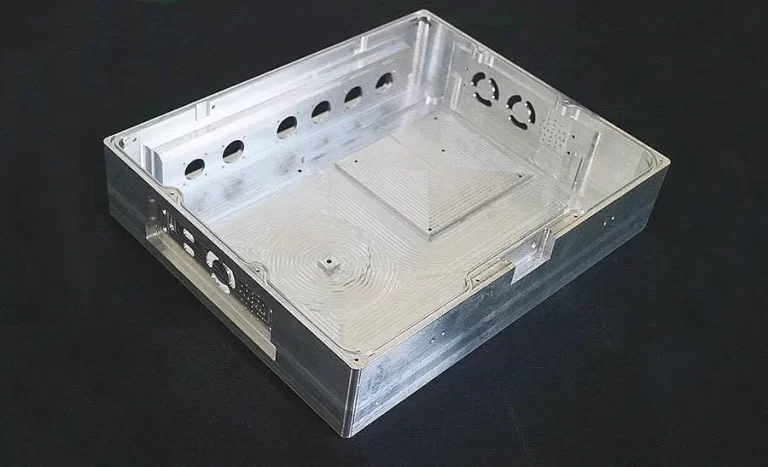
Easy to deform thin-walled parts processing, has been the processing…
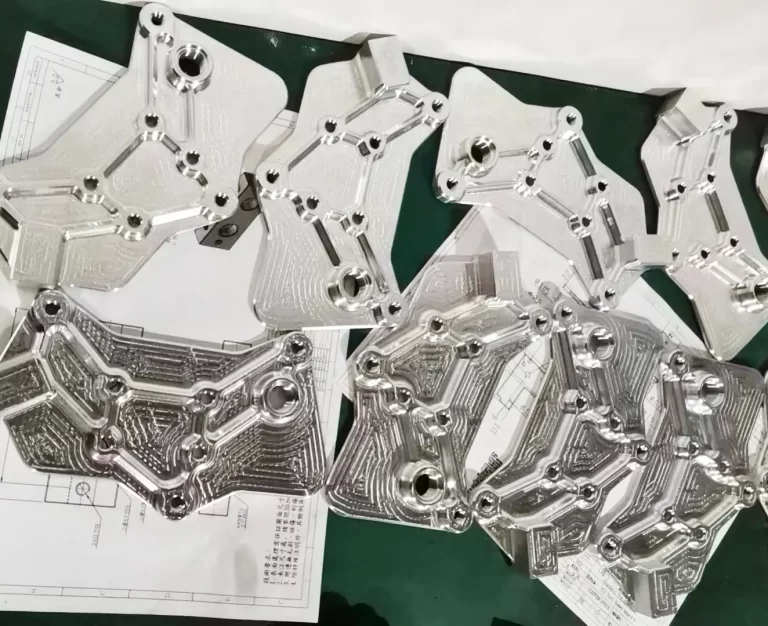
Now we attach importance to the design of intelligent agricultural…